


Run software work the same way, every time.
A workflow is a structured sequence of agent and human steps, defined once and run every time, with a clear trigger, a defined goal, and a complete record of what happened and why.
Without Upsun Dispatch
No consistent process
Every developer prompts, reviews, and approves AI output differently. What gets checked depends on who's checking, with little standardization across teams.
No record of what happened
A change gets approved in a comment or a nod across the room. There's a trace, but nothing structured, and no easy way to find it later.
No way to manage the process at scale
Fixing one broken review habit means retraining every individual engineer, one at a time, forever.
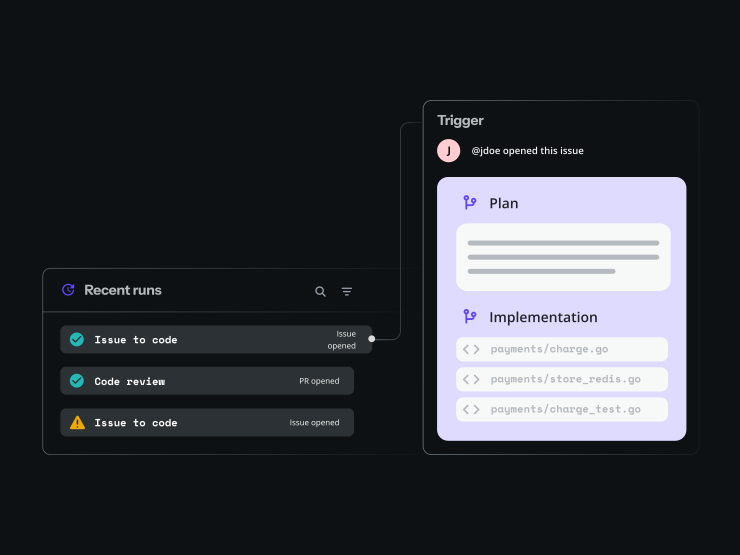
Define the whole path once.
Upsun Dispatch replaces ad hoc habits with a workflow defined once: what an agent does, what it has access to, where a human decides, and what happens next.
Built for consistency across every run
Workflows remove the variance between individual habits and replace it with one defined process the whole team shares.
- Multi-step, with defined agent and human stages
- Schedulable, for recurring work like dependency scans
- Every run logged and auditable
- Works across GitHub, GitLab, Linear, and Jira
How a workflow runs
Trigger
A trigger ties the workflow to an event in a tool the team already uses: a pull request opens, a commit lands, an issue is assigned to Dispatch or Dispatch is mentioned, a scheduled time hits, or someone starts it manually.
Agent steps
The agent runs in an isolated container with a fresh copy of the repository, then does the defined work: reviewing a change, posting comments, or deciding whether a push needs a fresh review.
Human gate
The workflow pauses at any step built to support approval. Nothing moves forward until someone on your team says yes.
Resolution
The workflow completes, and everything it did, every step, every decision, is logged against that run.
Built to earn trust in what agents ship

Security sign-off
Approval happens within your Dispatch team before anything ships, wherever the workflow calls for a human decision.

Regular maintenance
Run dependency scans and routine fixes, with a human only pulled in when something needs a decision.

Cross-tool coordination
A workflow can span an issue tracker and a repo, without needing everyone to work inside one dashboard.

Auditable by design
Every workflow run is a record: what happened, who approved it, and why, ready before anyone has to ask for it.
Move at agent speed, with a record you can point to
Stay updated
Upsun Cloud: compliant and validated