


Every agent runs in its own isolated sandbox
Agent-generated code executes in an isolated, ephemeral environment, fully detached from your live infrastructure by default. Nothing moves forward until a human approves it.
Without Upsun Dispatch
No visibility into what an agent touched
An agent's actions are invisible to everyone but the person running it. Whether anything went wrong is a matter of trust, not verification.
Permissive by default
A laptop is allow-by-default. Whatever the agent can reach, it can act on, unless someone specifically locked it down.
You find out what's missing when it fails
A service the agent needed, test data that wasn't there, an internal package nobody thought about. Each gap surfaces as a broken run, and the fastest fix is usually to open something up.
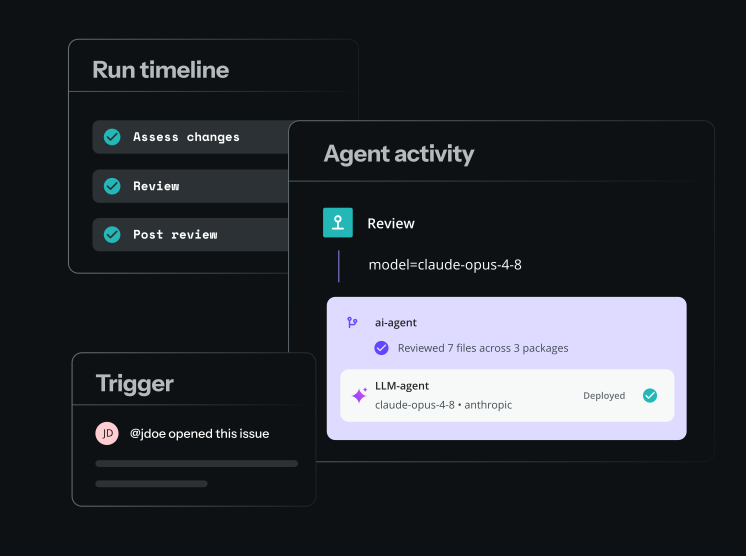
Every run, visible from trigger to result
See exactly what triggered a run, what the agent did, and what it touched, in one place.
Built so a bad run can't become a bad day
Sandboxes exist so a proposed change can be reviewed safely, without ever reaching your systems.
- Isolated per run, not shared across workflows
- No access to your infrastructure by default
- Torn down automatically once a run completes
- Every action inside a sandbox is logged against the run
- Consistent across every connected repo
Isolation that doesn't slow agents down
Ephemeral by default
Each sandbox exists only for the run that created it. Spun up, used, and shuts down automatically, every time.
Parallel by design
Isolation doesn't mean waiting your turn. Workflows run side by side, each in its own sandbox, and one run never blocks another.
Isolated from your infrastructure by default
The sandbox has no access to your live infrastructure on its own. What a workflow can reach depends entirely on how it's configured.
Scoped by design

Security teams
Security can trust that agents never reach your production environment without an approved, logged review. Access to other connected tools follows whatever the workflow declares.

High-velocity engineering teams
Move fast on agent-generated changes without one bad run turning into an incident.

Parallel runs, fully separated
Run several workflows at the same time. Each step gets its own sandbox, and no two runs ever share one.

Platform teams
Scale by running more instances of a workflow side by side. Within a run, agents share a sandbox as they move through each step, but one run never touches another's.

Compliance and audit
Every sandbox run is logged, giving auditors a clear record of what an agent touched and what it didn't

Torn down after every run
The sandbox is created for one run and destroyed when it finishes. No state, files, or credentials carry over to the next one.
Give every agent room to work. Not room to break something.
Stay updated
Upsun Cloud: compliant and validated